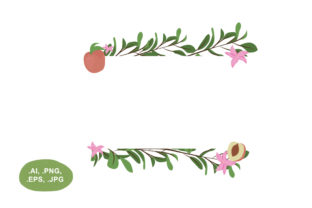
Botanical Floral Top and Bottom Border: Elevating Design with Organic Framing
In the evolving landscape of digital and print design, the quest for organic, natural aesthetics has led to a resurgence in botanical illustration. Among the most versatile tools in a modern creator's arsenal is the Botanical Floral Top and Bottom Border. This design element serves as more than mere decoration; it acts as a structural frame that guides the viewer’s eye, establishes tone, and infuses projects with a sense of handcrafted elegance. Whether you are designing a wedding invitation, branding a sustainable skincare line, or crafting social media templates, understanding how to leverage these borders can significantly enhance the visual impact of your work.
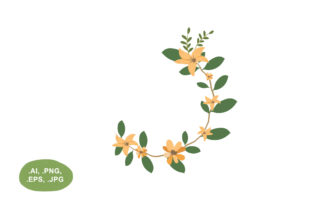
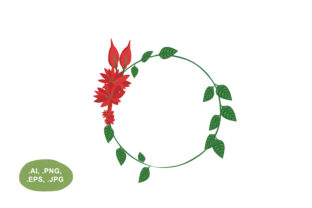
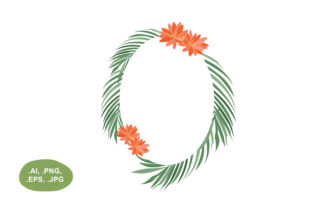
The true value of these assets lies in their technical versatility and artistic adaptability. When sourced correctly, a Botanical Floral Top and Bottom Border package provides comprehensive file formats including .ai, .eps, .png, and .jpg. This multi-format approach ensures that both professional designers using Adobe Illustrator and hobbyists working in Canva or Word can access high-quality graphics. Furthermore, the inclusion of a Botanical wreath with transparent backgrounds adds a layer of flexibility, allowing for central focal points that complement the linear borders without competing for attention.
The Functional Role of Botanical Framing in Visual Communication
To fully appreciate the utility of a Botanical Floral Top and Bottom Border, one must understand its function beyond ornamentation. In design theory, borders serve as containment vessels. They define the boundaries of content, creating a safe space for typography and imagery. A botanical border specifically softens these boundaries. Unlike rigid geometric lines, organic floral elements suggest growth, life, and approachability.
For business owners and marketers, this psychological cue is invaluable. A top and bottom border creates a horizontal flow that naturally leads the reader from the headline to the body text and finally to the call-to-action. It mimics the experience of opening a book or unrolling a scroll, invoking a tactile sensation even on digital screens. When utilizing a Botanical Floral Top and Bottom Border, you are effectively signaling to your audience that the content within is curated, thoughtful, and premium.
Technical Specifications and File Format Utility
One of the primary considerations when selecting digital assets is compatibility. A high-quality Botanical Floral Top and Bottom Border collection distinguishes itself through format diversity. Understanding which file type to use for specific scenarios is essential for maintaining design integrity.
- .AI and .EPS Files: These vector-based formats are the gold standard for professional printing and scalable design. Because they are mathematically defined rather than pixel-based, you can resize a Botanical Floral Top and Bottom Border to fit a billboard or a business card without losing resolution. These files also allow for color manipulation, enabling you to match the foliage to specific brand palettes.
- .PNG Files: For digital creators and non-designers, PNGs are indispensable. The key feature here is transparency. A Botanical Floral Top and Bottom Border in PNG format allows you to layer the graphic over colored backgrounds, photographs, or textured paper simulations seamlessly. This is particularly crucial for the included Botanical wreath with transparent backgrounds, which can be placed over complex layouts without unsightly white boxes.
- .JPG Files: While less flexible regarding transparency, JPGs offer universal compatibility and smaller file sizes. They are ideal for quick mockups, email signatures, or platforms that do not support alpha channels.
Practical Applications Across Industries
The adaptability of botanical framing makes it suitable for a vast array of projects. However, the application strategy should shift depending on the medium and the intended emotional response.
Wedding and Event Stationery
In the realm of event design, the Botanical Floral Top and Bottom Border is a staple for establishing romantic or rustic themes. Designers often use the top border to anchor the couple's names while the bottom border grounds the logistical details like date and venue. The accompanying Botanical wreath with transparent backgrounds frequently serves as the monogram frame. Because weddings require cohesive suites, having editable .ai files allows designers to extract individual leaves or flowers from the border to create matching table numbers, menus, and place cards.
Eco-Conscious Branding and Packaging
Brands focused on sustainability, wellness, or organic products rely heavily on botanical imagery to communicate their values visually. A Botanical Floral Top and Bottom Border on packaging labels or website headers instantly associates the product with nature. Here, the clean lines of the border help organize regulatory text and ingredient lists, making dense information feel less clinical. The transparency of the PNG files is especially useful for packaging design, where the border may need to sit atop kraft paper or recycled textures.
Digital Content and Social Media
Content creators face the challenge of stopping the scroll. A well-placed Botanical Floral Top and Bottom Border can transform a generic quote graphic into a branded asset. By using consistent botanical framing across Instagram posts, Pinterest pins, or blog headers, creators build visual recognition. The pre-made nature of these assets saves hours of illustration time, allowing creators to focus on messaging while maintaining a polished aesthetic.
Evaluating Suitability and Design Considerations
While botanical elements are universally appealing, they are not a one-size-fits-all solution. Before integrating a Botanical Floral Top and Bottom Border into your workflow, consider the following factors to ensure alignment with your project goals.
Visual Weight and Typography Pairing
Not all botanical borders carry the same visual weight. Some are dense and lush, while others are airy and minimalist. You must evaluate the density of the Botanical Floral Top and Bottom Border against your chosen typography. Heavy, ornate borders generally pair best with simple serif or sans-serif fonts to avoid visual clutter. Conversely, delicate, sparse borders can support more elaborate script lettering. Always test the contrast; if the border distracts from the readability of the text, it has failed its functional purpose.
Color Harmony and Customization
Ready-to-use assets often come in standard greens and earth tones. However, effective design requires color intentionality. If you are using the .ai or .eps versions of the Botanical Floral Top and Bottom Border, take advantage of the ability to recolor. Changing foliage from forest green to sage, dusty rose, or navy can completely alter the mood. Even when using PNGs, many design programs allow for hue/saturation adjustments or overlay blending modes to better integrate the border with your background.
Resolution and Print Readiness
A common pitfall in digital asset usage is resolution mismatch. Always verify the DPI (dots per inch) of your Botanical Floral Top and Bottom Border before sending designs to print. For professional results, ensure raster files (PNG/JPG) are at least 300 DPI at the final print size. Vector files (.ai/.eps) eliminate this concern entirely. Additionally, check the bleed area; if your border is intended to run to the edge of a printed piece, ensure the artwork extends sufficiently beyond the trim line to prevent white borders after cutting.
Maximizing Value Through Creative Adaptation
To get the most out of your asset pack, think modularly. A comprehensive Botanical Floral Top and Bottom Border set is essentially a library of individual components. Professional designers rarely use the border exactly as presented. Instead, they deconstruct it.
- Isolate Elements: Use the vector files to pull single stems or buds from the main border to use as bullet points or dividers within body text.
- Create Corners: Crop sections of the top and bottom borders to create L-shaped corner accents for certificates or formal documents.
- Layering Depth: Combine the Botanical Floral Top and Bottom Border with the Botanical wreath with transparent backgrounds. Place the wreath behind the text and the borders in front to create a sense of depth and immersion.
- Mix and Match: Pair a dense top border with a sparse bottom border to create asymmetry, which can make modern designs feel more dynamic and less traditional.
Final Thoughts on Organic Design Assets
The integration of natural elements into structured design solves a fundamental tension between order and emotion. A Botanical Floral Top and Bottom Border provides the necessary structure to organize information while delivering the emotional warmth associated with flora. By ensuring you have access to .ai, .eps, .png, and .jpg formats, you future-proof your creative workflow against varying technical requirements.
Whether you are a seasoned graphic designer looking to expedite your workflow or a small business owner crafting your own marketing materials, these assets offer a bridge between professional polish and organic authenticity. The inclusion of a Botanical wreath with transparent backgrounds further expands the creative possibilities, offering a centralized motif that harmonizes with the linear framing. Ultimately, the success of using these borders depends on thoughtful application—respecting the balance between decoration and communication, and choosing the right technical format for the task at hand. When used with intention, botanical borders do not just frame content; they elevate it.